

The Census Forecast REWRITES the Electoral College Math For the 2030s
Democrat-leaning and swing-states have lost population to Republican-leaning states, causing a dilemma for the Democrat Party in the 2030s.

Join our National Sentiment Panel: https://wss.pollfish.com/link/522d0e01-b70f-4955-8514-b42a7f10d4b6
Recent census-based apportionment projections suggest that long-term population shifts are likely to reshape the Electoral College in a way that structurally favors Republicans. States that have historically leaned Democratic or operated as swing states are projected to lose representation, while Republican-leaning states are expected to gain electoral votes. This creates a growing dilemma for the Democratic Party as it looks ahead to elections in the 2030s.
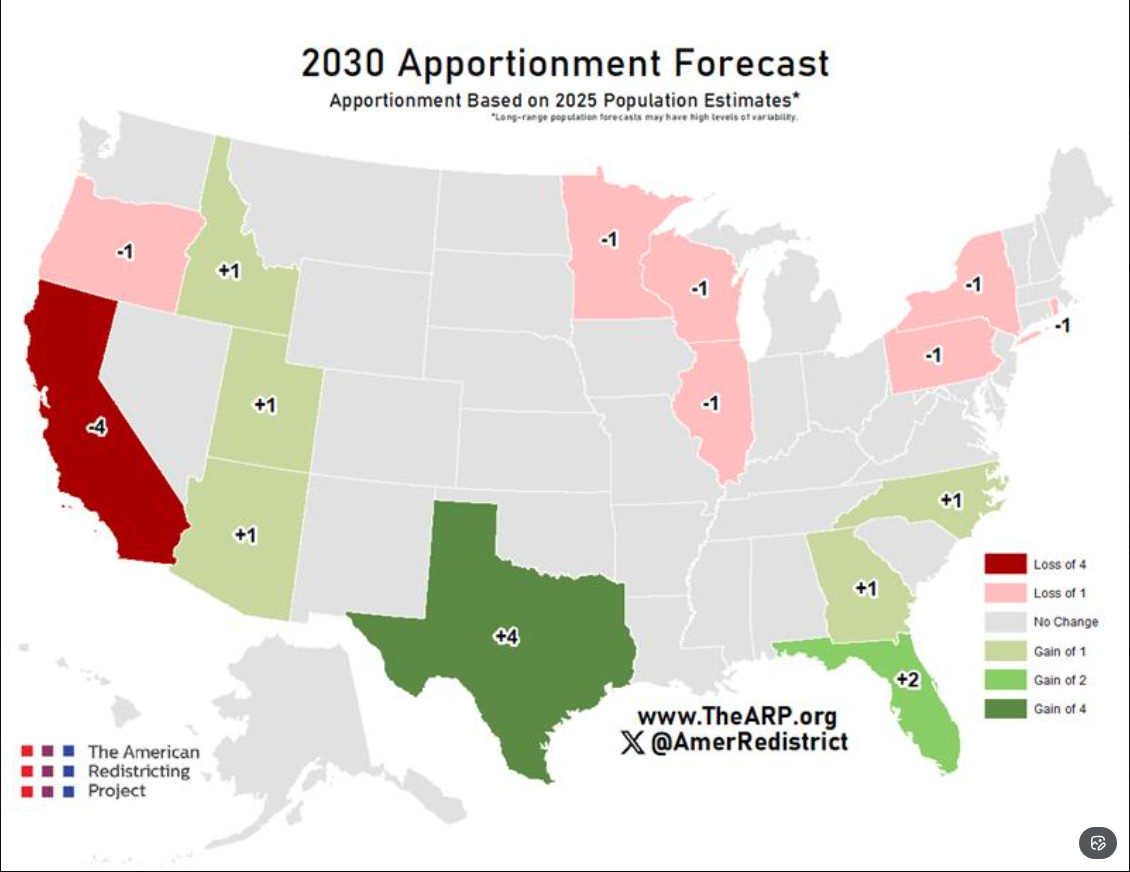
What you are seeing is the latest 2030 apportionment forecast produced by the American Redistricting Project, an organization that tracks population movement across states and its implications for congressional and Electoral College representation.
Every ten years, the United States conducts a national census to collect population and demographic data. These figures are used to reapportion seats in the House of Representatives, which in turn determines the distribution of Electoral College votes for the following decade. As population flows change, so does the underlying math required to win the presidency.
Over the past twenty years, population growth has been concentrated in a specific set of states, most notably Arizona, Georgia, North Carolina, Florida, and Texas. These states have become major destinations for northern retirees, seasonal residents, and individuals relocating for employment opportunities tied to expanding economic sectors such as technology, energy, and government-related industries.
![OC] US Domestic Migration this past Year (Where people moved) : r/dataisbeautiful](https://substackcdn.com/image/fetch/$s_!mc5Z!,f_auto,q_auto:good,fl_progressive:steep/https%3A%2F%2Fsubstack-post-media.s3.amazonaws.com%2Fpublic%2Fimages%2F345a21f1-29eb-448d-8747-a1909ad51ee9_3158x1867.png "OC] US Domestic Migration this past Year (Where people moved) : r/dataisbeautiful")
All of these states were carried by Donald Trump in the 2024 presidential election, with margins ranging from narrow wins to comfortable victories. Together, they formed a durable foundation that allowed Trump to remain electorally competitive against Kamala Harris, even as Democrats retained strength in several traditional battlegrounds.
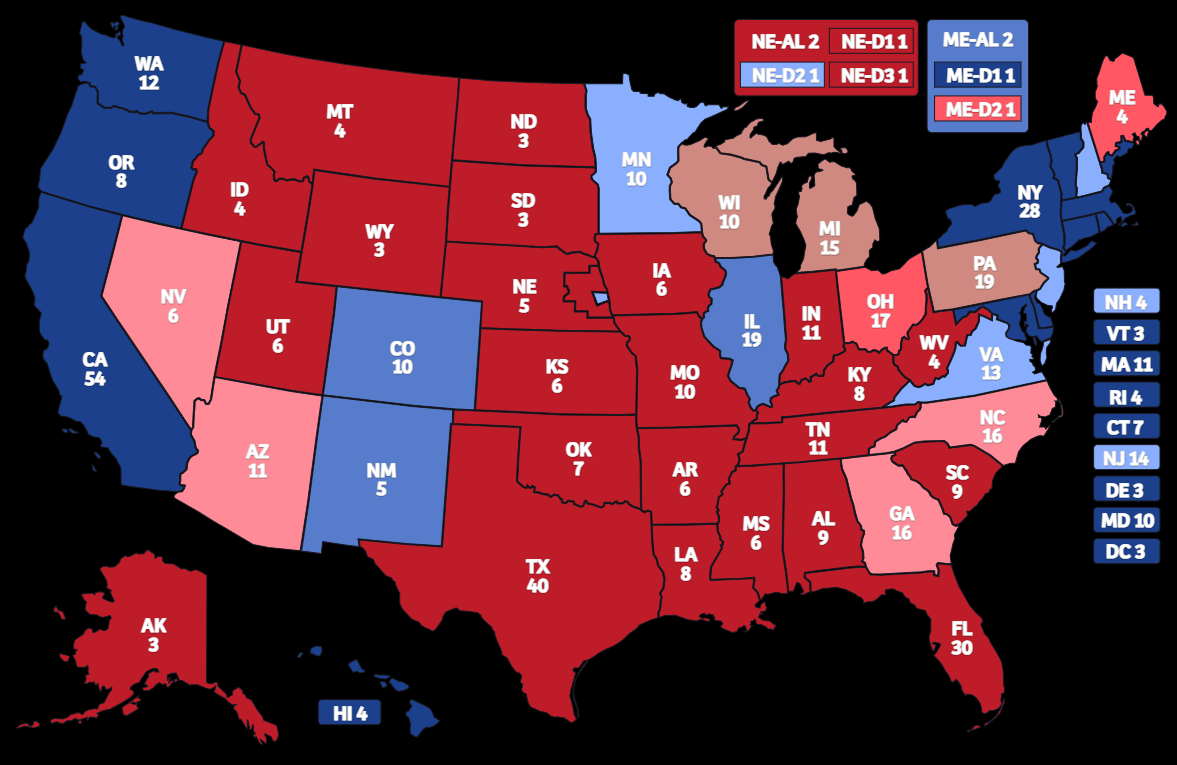
Contrary to much post-election commentary, Kamala Harris had only one viable path to the White House in 2024. That path required winning all three Rust Belt states of Wisconsin, Michigan, and Pennsylvania. Had those three states flipped, Harris would have secured exactly 270 electoral votes and become the forty-seventh President of the United States, as well as the first female president.
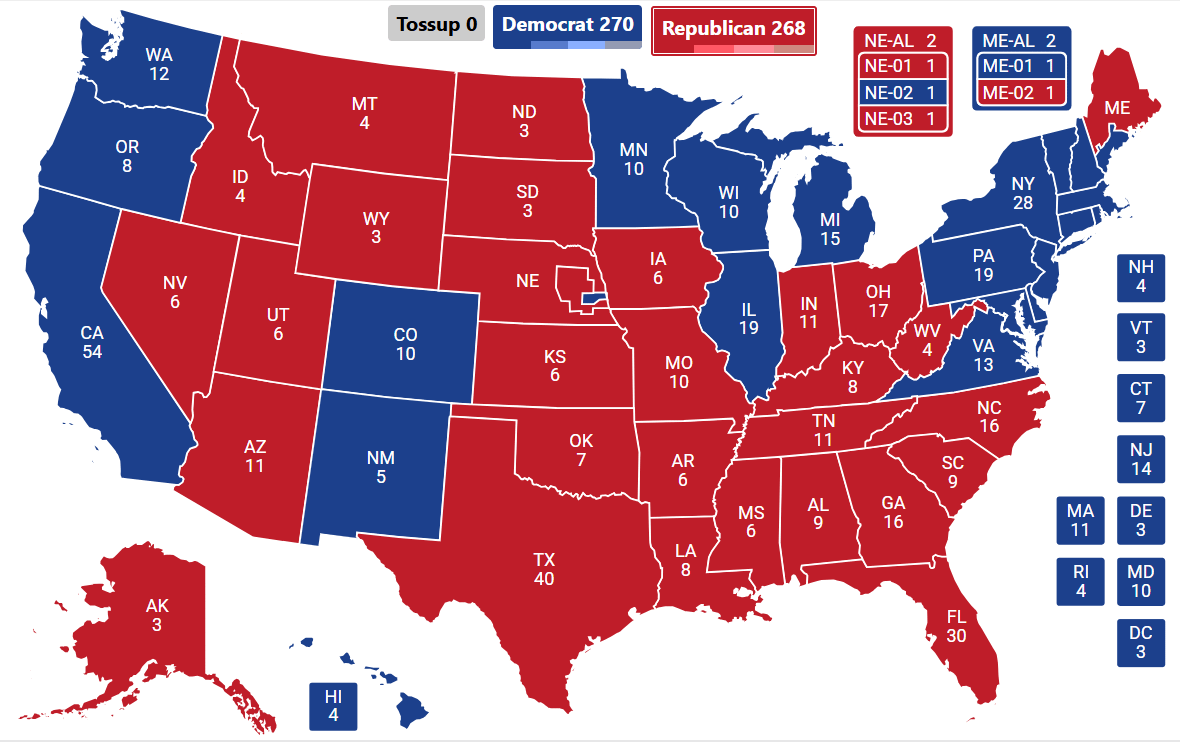
Looking ahead to 2028, the political environment remains uncertain, but internal estimates currently show JD Vance holding a narrow advantage over Gavin Newsom. If that scenario were to result in a Vance victory, and assuming he entered 2032 as the incumbent president, the census-based apportionment forecast would give Republicans one of the most favorable re-election environments in modern presidential history.
Under an early 2028 or 2032 Electoral College map using the projected apportionment, Republicans would begin with approximately 239 electoral votes. This places them just 31 votes short of the 270 needed to win, before any true battleground states are contested.
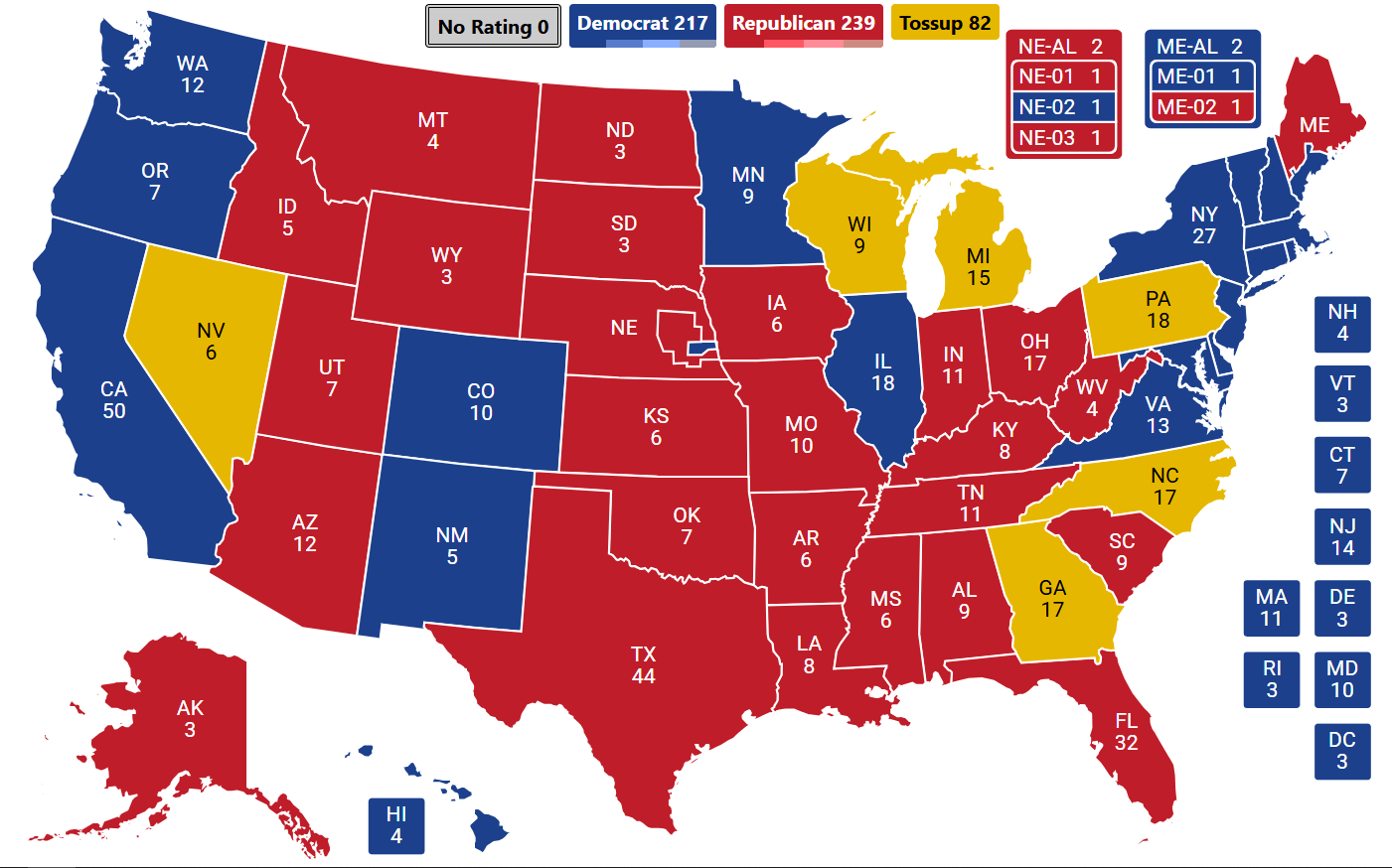
Even if Democrats were able to replicate the exact Rust Belt strategy that nearly succeeded in 2024, that path would no longer be sufficient under the new map. A Democratic nominee in 2032 would still fall short in the Electoral College and would be required to flip at least one additional Southern swing state, such as Georgia or North Carolina, to reach a winning coalition.
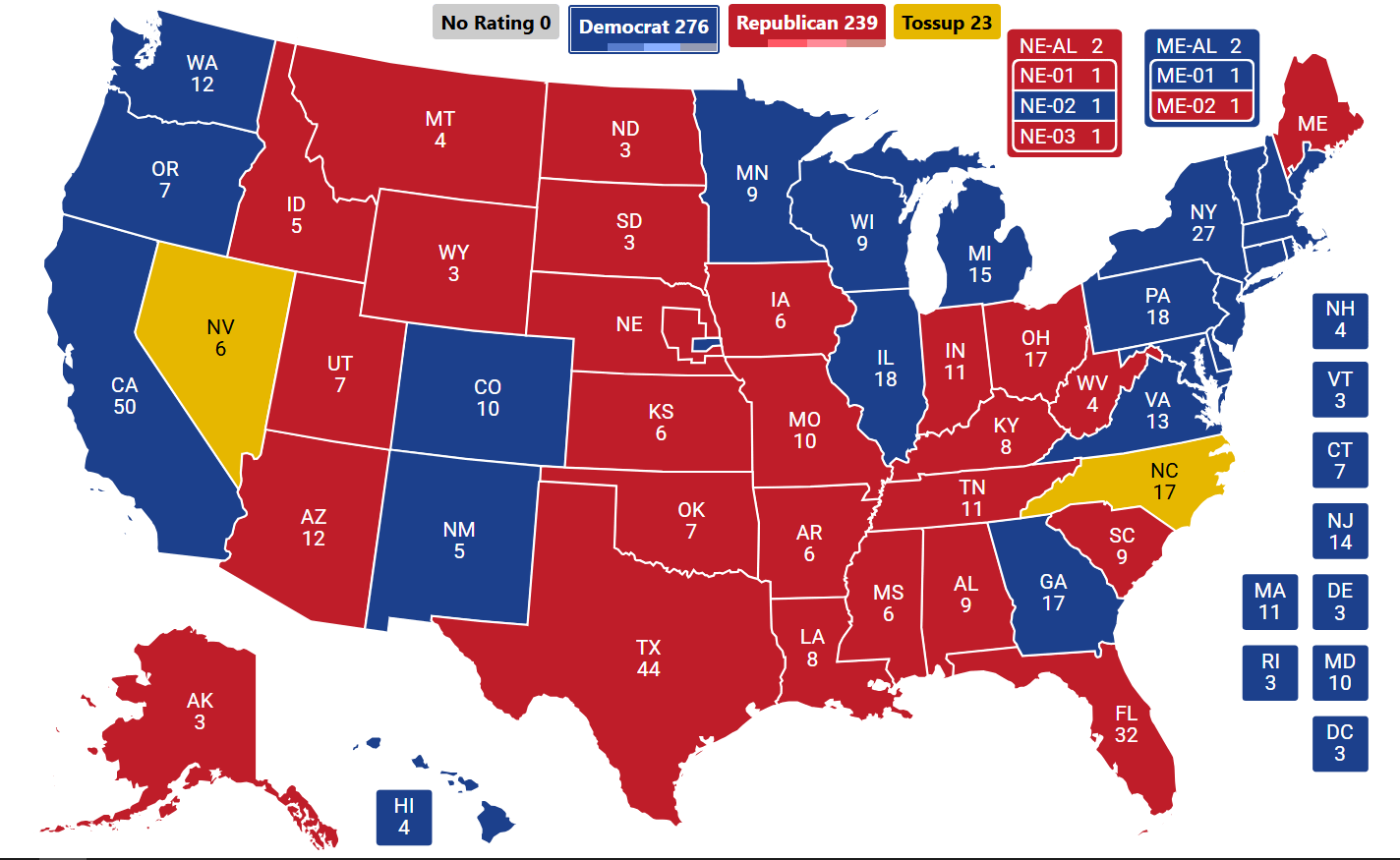
While this is not an impossible task, it significantly raises the difficulty level. Democrats have previously won Georgia, most notably in 2020 under Joe Biden, and internal tracking suggests the state may trend blue-leaning by 2028 due to demographic change and ideological realignment. At the same time, Pennsylvania, once a reliable anchor for Democratic presidential campaigns, is increasingly competitive and could plausibly shift into lean Republican territory by 2032, driven by voter registration trends that increasingly favor Republicans.
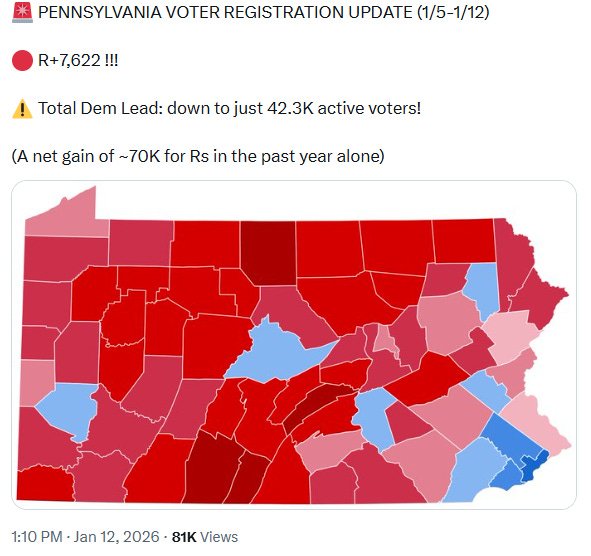
If Pennsylvania were to break from the traditional Rust Belt alignment it has shared with Michigan and Wisconsin since 1992, the Democratic path becomes substantially narrower. In that scenario, Republicans would have multiple routes to victory, while Democrats would face a far more constrained map.
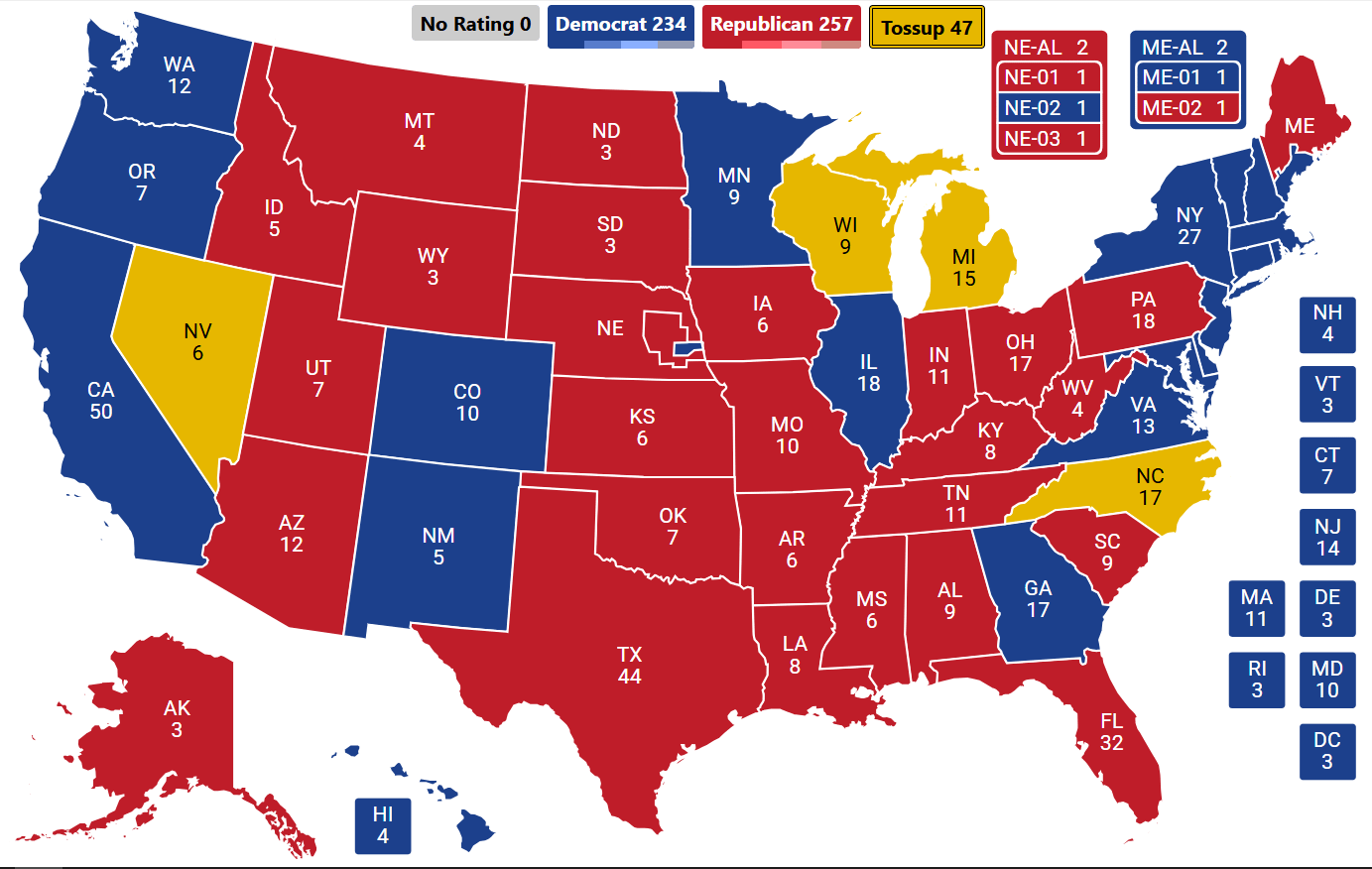
A Republican candidate such as JD Vance could focus on reclaiming Arizona and then target either the remaining Rust Belt states or North Carolina’s electoral votes to secure re-election.
By contrast, Democratic paths would require winning multiple states that have voted for Donald Trump in at least two of the last three presidential elections, leaving little margin for error.
The contrast between these paths highlights a fundamental shift in the Electoral College landscape. Republican strategies in the 2030s are increasingly defined by flexibility, with multiple viable combinations of states capable of delivering victory. Democratic strategies, by comparison, are becoming narrower and more conditional, requiring near-perfect execution across several competitive states simultaneously.
This shift represents a reversal of the dynamics that defined presidential elections throughout much of the 2000s and 2010s, when Republicans were often forced to thread together improbable coalitions while Democrats benefited from a more stable electoral baseline. The projected census apportionment suggests that this advantage is now moving in the opposite direction.
For Democrats, success in the 2030s will depend on expanding their appeal beyond the traditional Rust Belt coalition and making meaningful gains among working-class and non-college voters in the South and Sun Belt. Without measurable improvements among these groups, the Electoral College math will continue to favor Republican candidates even in relatively close national elections.
For Republicans, the challenge is different. Maintaining the coalition that delivered victories in 2016, 2020, and 2024 becomes paramount, as even modest erosion could narrow their advantage. However, under the current population trends, Republicans enter the next decade with a structural head start that significantly lowers the threshold required to win the presidency.
Taken together, these developments illustrate how demographic movement and census-driven reapportionment are quietly reshaping American presidential politics. The Electoral College math of the 2030s will not merely reflect changing voter preferences, but the cumulative effect of population shifts that have been building for decades, fundamentally redefining the strategic terrain for both parties.
Subscribe to our Substack & follow us on X/Twitter for future analysis.
Join our National Sentiment Panel: https://wss.pollfish.com/link/522d0e01-b70f-4955-8514-b42a7f10d4b6
Twitter/X/Substack: @TPSIOfficial